
Living Plants vs Preserved Moss: Which Is Better for Interior Design?

Greenery has become one of the most influential elements in modern interiors. From residential spaces to commercial environments, designers increasingly incorporate natural elements to soften architecture and create a sense of calm. In cities like Singapore—where urban density meets an appreciation for nature—the demand for biophilic interior design continues to grow. Yet when it comes to integrating greenery indoors, a common question arises:
Should you choose living plants or preserved moss?
Both options bring nature into a space, but they serve very different purposes in design, maintenance, and practicality.
Living Plants in Interior Design

Living plants have long been associated with wellness and vitality. Their presence introduces movement, freshness, and a visible connection to nature.
Many interior designers incorporate plants to soften architectural lines and create organic contrast within modern spaces.
Advantages of Living Plants
1) Natural growth and vitality
Living plants evolve over time, creating a dynamic environment that changes as they grow.
2) Air quality perception
Although the air-purifying effects are often modest in interior settings, plants contribute psychologically to the feeling of fresher air and healthier spaces.
3) Visual diversity
Different species introduce varied shapes, colours, and leaf textures, offering flexibility in styling.
Challenges of Living Plants Indoors
Despite their beauty, living plants require ongoing care.
Common challenges include:
Regular watering schedules
Access to natural sunlight
Pest control and plant health management
Replacement when plants decline
In air-conditioned or low-light interiors—common in urban offices and retail environments—plants may struggle to thrive without dedicated maintenance.
Preserved Moss in Interior Design
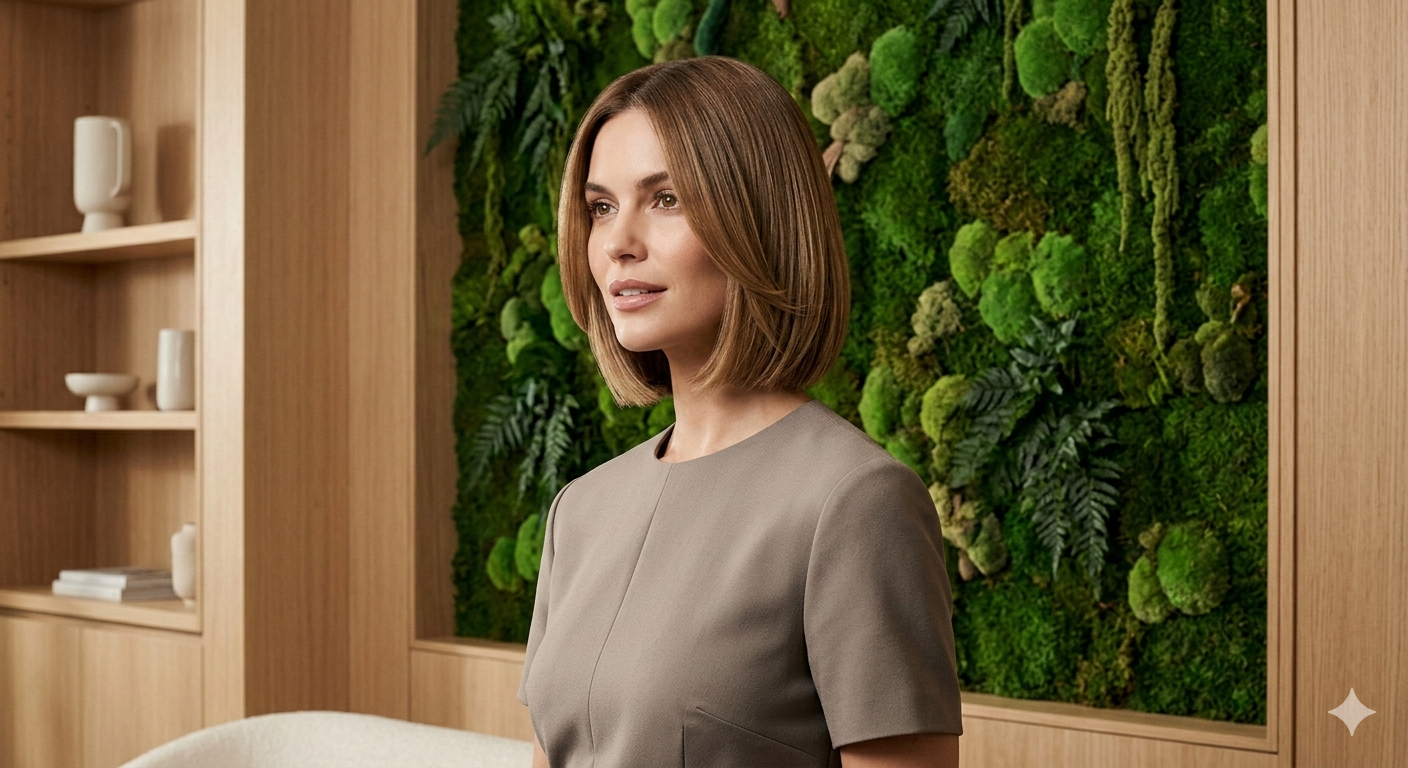
Preserved moss offers a different interpretation of biophilic design. Instead of growing plants, moss is naturally preserved to maintain its colour, softness, and texture for years. This makes moss wall interior features particularly appealing in spaces where maintenance or sunlight is limited.
Advantages of Preserved Moss
1) Maintenance-free
Preserved moss requires no watering, sunlight, or trimming.
2) Long-lasting aesthetic
When properly installed, preserved moss can remain vibrant for many years.
3) Ideal for enclosed interiors
Because it does not rely on natural light, moss installations work well in offices, corridors, meeting rooms, and retail spaces.
4) Textural richness
Moss walls introduce a tactile, organic surface that functions almost like a living artwork within the architecture.
Design Impact: Living Plants vs Moss Walls
From a design perspective, both options create different experiences.
Living Plants
Best for open spaces with natural light
Suitable for residential interiors and lounges
Creates a lively, evolving atmosphere
Preserved Moss Walls
Ideal for feature walls and architectural statements
Works well in offices, hospitality spaces, and retail
Offers controlled, sculptural greenery
While plants create scattered pockets of greenery, moss walls act as a cohesive design element, often becoming a focal point of the space.
Maintenance Considerations
Maintenance is often the deciding factor between the two.
Living plants require:
Watering and fertilising
Adequate sunlight
Periodic replacement
Professional plant maintenance in commercial spaces
Preserved moss requires:
No watering
No sunlight
Minimal care aside from keeping it dry and clean
For busy workplaces and high-traffic commercial environments, preserved moss provides a more predictable and manageable solution.
Which Is Better for Interior Design?
The answer depends on the intention of the space.
Choose living plants when:
The environment receives natural light
There is access to regular plant care
You want an evolving, organic atmosphere
Choose preserved moss when:
Maintenance must be minimal
The interior has limited sunlight
A striking green feature wall is desired
In many modern interiors, designers combine both—using plants for softer accents and moss walls for architectural impact.
A Balanced Approach to Green Interiors
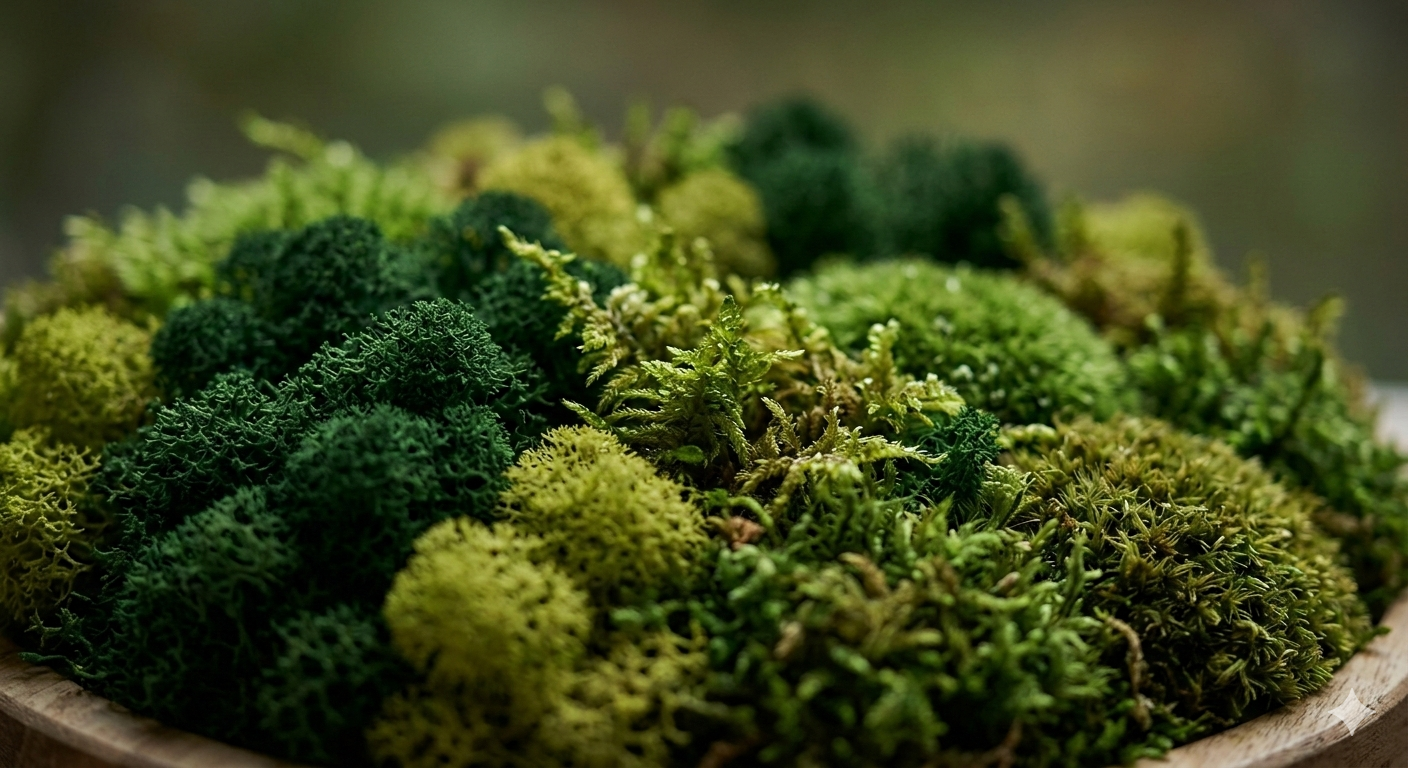
Biophilic design is not about choosing one type of greenery over another. It is about understanding how nature can best support the function and atmosphere of a space. Sometimes that means living plants growing quietly in the corner. Other times, it means a moss wall transforming an entire room with texture and depth. Both approaches remind us of something important: even in the most urban environments, nature still belongs indoors.
Talk to us if you need any advise at info@inoutatelier.com. Our friendly team is more than happy to assist.